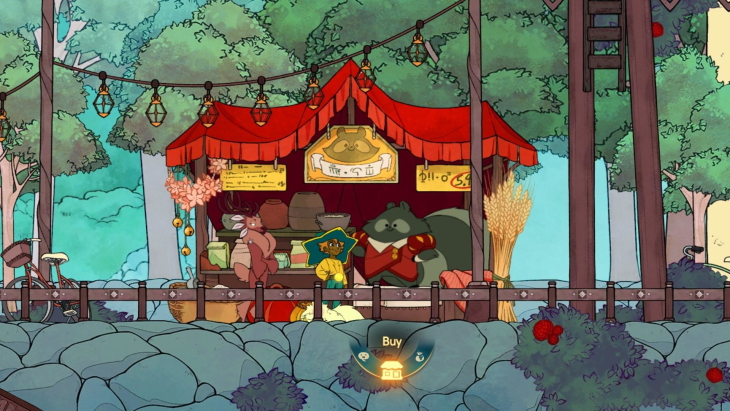
Every country has its own way of relaxing after a brutal day. But a growing number of people across the globe are reaching for a controller, a mouse, or a phone and sinking into games that feel less like competition and more like a warm blanket.
Cozy gaming has blown up in the last few years. Stardew Valley, Animal Crossing, and Spiritfarer proved that millions of players want something gentler from their screen time. But what’s interesting is how differently people around the world approach the whole idea. The genres shift. The rituals change. And sometimes the reasons people play have almost nothing to do with gaming itself.
Japan: Slow Living Through Simulation
Nobody does life simulation quite like Japan. The country that gave us Animal Crossing has a deep love for games where you tend gardens, build towns, and mostly just exist in a peaceful digital space. There is a cultural thread here tied to “iyashi,” which roughly translates to healing or soothing. It shows up everywhere in Japanese media, from anime to cafe design, and Japanese players naturally gravitate toward games that carry that quality.
Japan’s long train commutes also created a culture of portable play built around killing time peacefully rather than chasing high scores. Puzzle games, visual novels, and rhythm games with calming soundtracks sell incredibly well. It is not uncommon for a Japanese gamer to describe their nightly routine as winding down with something quiet on the Switch before sleep.
South Korea: The Quiet Side of a Competitive Culture
South Korea is famous for fierce competitive gaming. StarCraft, League of Legends, pro players treated like rock stars. But after hours of ranked play, many Korean gamers decompress with something totally different.
Casual mobile games are enormous in Korea. Titles focused on decoration, cooking, and character collecting pull massive numbers. Walk through a PC bang late at night and you will find plenty of people quietly farming in MMOs or running virtual shops in MapleStory. The vibe shifts after midnight. The screaming at League matches fades, and people slouch in their chairs doing something easy that asks nothing of them except presence.
Brazil: Social Gaming as Self-Care
In Brazil, gaming is deeply social. It is less about what you play and more about who you play with. Brazilian gamers have embraced party games and cooperative titles with a kind of warmth that makes total sense culturally. Overcooked, It Takes Two, and Minecraft become excuses to gather friends on a couch or through Discord calls that last until three in the morning. The game is almost secondary. It is the conversation and the laughter that matter.
Mobile gaming also plays a massive role. With smartphones being more accessible than consoles for a huge portion of the population, casual puzzle games and farming sims have found an enormous audience. Plenty of people in São Paulo describe their daily bus ride as their gaming time, playing something light to take the edge off a long commute.
Germany: Board Games Gone Digital
Germany produces more board games per capita than almost anywhere else, and that love has carried over into digital gaming. German players are drawn to strategy games that reward patience over reflexes. Farming Simulator is a genuine cultural force there, not a joke. Players spend hundreds of hours managing virtual fields, and they find it profoundly relaxing.
There is also a strong indie scene leaning into atmospheric, non-violent exploration. Studios like Mooneye Studios and Fizbin create experiences tailor-made for someone who wants a quiet evening of play. German gamers seem to value depth and deliberation in their relaxation. They want to think, but slowly.
Iceland and the Nordics: Long Winters and Digital Comfort
The Nordic countries have some of the longest and darkest winters on the planet. When the sun disappears for most of the day, people find ways to make indoor life feel warm and full.
The Danes have a word for this: hygge. It describes a feeling of coziness that goes beyond lighting a candle. It is an entire philosophy of embracing simple pleasures during harsh seasons, and it has shaped how Nordic people spend their downtime in powerful ways. Board games, baking, reading by a fire, gaming: all expressions of the same impulse.
Icelanders and their Nordic neighbors have quietly become some of the most engaged digital entertainment consumers in Europe. The region that produced EVE Online also has a massive appetite for slower experiences. Valheim took off in the Nordics partly because building and sheltering from a hostile world mirrors the real experience of getting through a northern winter. And it is not just traditional gaming. Iceland’s small but tech-forward population engages with all kinds of digital entertainment during those long evenings, from streaming services and indie games to online casinos in Iceland. The common thread is that same desire for warmth and stimulation when the world outside offers neither.
What makes the Nordic approach unique is how unapologetic it is. There is no guilt attached to spending a whole Saturday indoors with a farming sim while snow piles up outside. The culture actively encourages it. Rest is productive. Comfort is a skill.
The Bigger Picture
What ties all of these cultures together is something simple. People are tired. The world is loud and constantly pulling at your attention. Cozy gaming, whatever form it takes in your part of the globe, is an answer to that exhaustion.
The genres differ from country to country. The platforms change. But the core need is universal. Whether you are winding down in Tokyo with Animal Crossing, building a longhouse in Reykjavik while a blizzard howls outside, or laughing through Overcooked at midnight in Rio, you are all doing the same thing.
You are choosing comfort. And there is nothing small about that.

